There is nothing wrong with having one pallet supplier.
In fact, if that supplier knows your specifications, delivers consistently, understands your receiving requirements and can handle changes in volume, giving them most or all of the business can make life considerably easier.
The problem starts when a good supplier relationship quietly becomes a dependency nobody has really measured.
You usually find out on the wrong day.
A truck is delayed. Equipment goes down at the supplier’s plant. Your production schedule suddenly jumps. A large order consumes more pallets than forecast. Or the supplier simply doesn’t have enough capacity for an urgent request.
Then someone asks:
“Who else can make this pallet?”
If nobody has a confident answer, you don’t really have a backup supplier.
You have a search problem.
The real question isn’t one supplier or two
Procurement teams sometimes treat dual sourcing as though it is automatically safer.
It isn’t always.
Adding a second supplier means another company has to understand the specification. Incoming quality can vary. Purchasing has another relationship to manage, and splitting volume can weaken the economics of the primary agreement.
For a common pallet with predictable demand and a dependable regional supplier, single sourcing may work perfectly well.
The decision changes when the pallet becomes critical to production.
If your supplier misses tomorrow’s delivery, what actually happens?
If the answer is, “We have enough stock for another week,” the risk may be manageable.
If the answer is, “Shipping starts running out tomorrow afternoon,” that’s a very different conversation.
That is a much more useful way to think about backup supply than simply saying every company should have two vendors.
A pallet shortage can become a production problem very quickly
Pallets are unusual from a procurement perspective because they are relatively bulky compared with their unit value. Where the supplier is located, what equipment they have, what lumber is available and how quickly they can put a truck on the road all matter.
And not every pallet is equally easy to replace.
If a facility needs a common 48×40 pallet, there may be several possible sources.
If it needs a 14-foot machinery skid with a specific blocking arrangement, or a recurring export crate built to an approved drawing, finding another company that sells “pallets and crates” doesn’t necessarily solve the problem.
The backup has to be capable of making your product.
This is also why the Canadian pallet market is putting more emphasis on supplier networks rather than isolated transactions. PalletTrader’s Canadian managed-service expansion in 2026, for example, was positioned around matching customers with suppliers based on operational strengths while improving visibility and consistency across pallet programs.
For a plant manager, the practical takeaway is much simpler:
Know where your second option is before you need it.
Being in the vendor system doesn’t make someone a backup supplier
This is probably the biggest weakness in many contingency plans.
Procurement has a second pallet company in the vendor database, so everyone assumes there is a backup.
But has that company ever seen the current drawing?
Have they built a sample?
Do they know which substitutions Engineering will accept?
Can they supply the same recycled grade consistently?
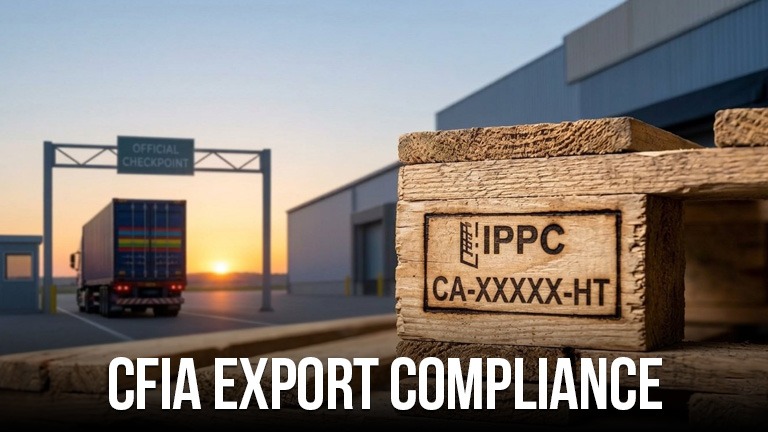
If the pallet is heat treated, can they meet the required export specification?
And, importantly, how much can they actually produce when you need them?
A supplier that says, “Yes, we can make custom pallets,” may still need several days to source a particular lumber length, prepare a jig or work an unfamiliar design into production.
That isn’t a criticism of the supplier. It’s simply the reality of custom manufacturing.
The time to discover it is not when your primary supplier has already missed a delivery.
Custom packaging changes the risk completely
Backup planning becomes more important as the packaging becomes less standard.
Think about an oversized skid used for one piece of machinery. Perhaps it only runs 30 or 50 units at a time. The volumes aren’t large enough to attract much attention in an annual purchasing report, but without that skid the finished machine can’t ship.
That’s a low-volume purchase with a potentially high operational consequence.
Custom production can also involve unusual lumber lengths, drawings, cut lists, blocking patterns, hardware, fasteners and dedicated assembly. Industry investment in flexible automation for oversized and short-run pallet production reflects exactly this challenge: custom work doesn’t behave like repetitive production of one standard pallet.
So when qualifying a backup for custom work, don’t just ask whether the company makes pallets.
Send the drawing.
Let them review it.
If the item is genuinely production-critical, having an approved sample built before the emergency can be worth far more than having another supplier’s phone number.
Sometimes the best backup is an approved alternate pallet
There is another option that gets overlooked.
The second source doesn’t necessarily have to make the pallet in exactly the same way as the first.
Suppose the existing specification calls for a particular lumber species or component size. Engineering may determine that another configuration can provide the required performance using material that is easier to source regionally.
Now Procurement has two approved ways to solve the same packaging requirement.
That flexibility can be extremely useful during a shortage.
The important part is approved.
An emergency is not the time for someone to decide that a pallet which is “pretty close” should probably work.
If alternate materials or configurations are acceptable, define them before the disruption and keep that information with the pallet specification.
How much business should the backup supplier receive?
There isn’t one correct percentage.
A company doesn’t necessarily need to split every pallet SKU 50/50 just to prove that it has two suppliers.
For some operations, the primary supplier can continue receiving nearly all of the normal volume while the secondary source remains qualified on the critical specifications.
For others, occasionally placing an order with the backup makes sense because it confirms that the drawing is current, the product still meets expectations and the supplier can actually manufacture it.
The right arrangement depends on the consequence of failure.
A useful way to think about it is not:
“How much volume should we give Supplier B?”
but:
“What would Supplier B need in order to take over this SKU without us starting from zero?”
That answer may include an approved drawing, a sample, forecast volume, expected lead time, material substitutions, export requirements and an agreed contact process.
Now the contingency plan is something Operations can actually use.
Try this before your next supplier review
Pick the pallet or wood packaging SKU that would cause the most trouble if it disappeared tomorrow.
Not necessarily the one you spend the most money on.
The one that would be hardest to replace.
Then ask:
If our current supplier told us today that they couldn’t deliver this for seven days, what would we do?
If Production can keep moving and another approved source is ready, the risk is probably under control.
If the answer involves calling unfamiliar pallet companies and emailing drawings around while finished product waits, you have found a gap in the supply plan.
You don’t need two suppliers for everything.
But for a pallet that can stop production or delay a high-value shipment, knowing your second move before the first supplier fails is simply good procurement.
Geo Pallet can support manufacturers that need a regional primary or secondary source for standard, recycled, heat-treated and custom pallets, as well as oversized skids and crates. For backup-supply planning, the useful starting point is the existing specification and expected volume so the product can be reviewed before it becomes an emergency order.
References & Further Reading
Pallet Enterprise — Pallet Trader Expands into Canada
Industry reporting on the 2026 expansion of managed pallet services into Canada, including supplier matching, visibility and pallet-program management.
https://palletenterprise.com/21169-2/
Pallet Enterprise — The Future at Work: Inside Alliance Automation’s Push to Reinvent Pallet Manufacturing and Recycling
Industry coverage of flexible automation used for custom, oversized and short-run pallet production.
https://palletenterprise.com/rev2-the-future-at-work-inside-alliance-automations-push-to-reinvent-pallet-manufacturing-and-recycling/