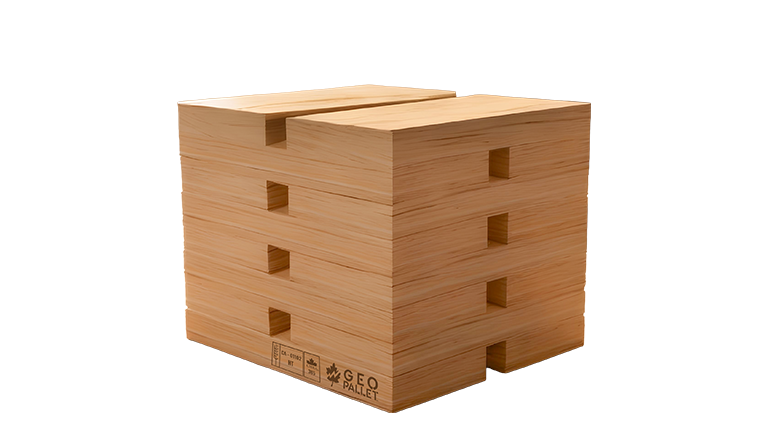
If your products hang over the edge of a regular pallet even a little, you already know how quickly things can get messy in a warehouse. Boxes shift during transport, corners get crushed, and loads stop feeling stable the second they leave the dock.
That’s one of the biggest reasons businesses start using wing pallets.
A wing pallet is designed with deck boards that extend past the stringers or blocks. That extra overhang gives products more surface support and helps keep wider loads balanced during storage and transportation.
You’ll usually see two styles:
- Single-wing pallets
- Double-wing pallets
Single-wing pallets extend on the top deck only, while double-wing pallets extend on both the top and bottom sections. Both styles are commonly used in warehouses that handle oversized or uneven products.
Wing pallets are popular in industries such as:
- Automotive
- Electronics
- Metal fabrication
- Agriculture
- Manufacturing
- Food distribution
In busy warehouse operations around Surrey and Vancouver, wing pallets are often used for products that don’t sit comfortably on standard pallet dimensions.
The added deck space helps improve load stability and gives products better support during shipping. This becomes especially useful when loads are stacked tightly inside trailers or containers.
Many businesses also prefer wing pallets because they help reduce product movement during transport. Less movement usually means fewer damaged shipments and fewer problems once products arrive at their destination.
For easier handling, wing pallets can also be built with notched stringers for four-way forklift access. That added flexibility makes them useful in fast-paced warehouse environments where products are constantly being loaded, unloaded, and moved around.
Depending on the application, wing pallets can be manufactured using softwood or hardwood lumber. Some businesses prefer lighter pine pallets for lower shipping costs, while others choose hardwood for extra durability and long-term reuse.
Like most pallet styles, the right design depends on the product itself. Weight, dimensions, storage systems, and shipping methods all play a role in choosing the right pallet structure.